Zero work experience doesn’t mean you’ve got nothing to say. Most freshers seize up right at the resume stage, and honestly, I get why every template floating around online seems built for someone who’s already had two jobs and a promotion. You haven’t. Fine. Recruiters hiring for entry-level roles already know that walking in. What they’re actually checking is whether you can take what you do have, projects, coursework, an internship, that college fest you somehow ended up running because nobody else volunteered, and present it like it matters. It does. You just have to stop apologizing for it.
Here’s how to actually put one together, piece by piece, skipping the filler recruiters scroll past without reading a single word.
What Should a Fresher Resume Actually Include
Summary, education, skills, projects or internships, certifications. Roughly that order, since there’s no work history section to lean on yet.
Skip the objective statement most templates try to talk you into (“Seeking a challenging role where I can utilize my skills…”). Genuinely, nobody reads those, I’ve never met a recruiter who claims otherwise. They just eat up space at the top of the page that could be showing something real instead. Swap it for a two-line summary: what you studied, what you can actually do, what role you’re chasing.
1. Lead With a Summary, Not an Objective
One question your summary has to answer: why should this recruiter keep reading past line two? Keep it to two lines, maybe three if you’re stretching. Degree, one standout skill or project, the role you want.
Something like: “B.Tech graduate with hands-on experience building three full-stack projects using React and Node.js, looking to start as a junior developer.” Concrete. Specific. Tells a recruiter more in that one line than a paragraph of “hardworking, dedicated, quick learner” ever could, and those three words show up on about half the fresher resumes out there, which is exactly why they’re worth nothing.
2. Put Education Front and Center
Right now, education is doing more heavy lifting than it ever will again once you’ve got a few years of actual work behind you. Enjoy the leverage while it lasts. Degree, institution, graduation year, and CGPA if it’s decent (above 7 or 70%, roughly, don’t stress the exact cutoff too much). Got coursework that ties directly to the job you’re after? List two or three subjects, nothing more, nobody wants your full transcript.
3. Turn Projects Into Proof of Skill
This is where most freshers leave value sitting on the table, untouched. Academic projects, hackathons, side builds, even something like organizing a college fest, all of it counts, but only if you frame it properly. Don’t just name-drop the project like it’s supposed to speak for itself. Say what you built, what tools you used, what actually came out of it.
- Weak: “Built a website for college project”
- Better: “Built an e-commerce website using HTML, CSS, and JavaScript, handling 200+ product listings and a working cart system”
Second one gives a recruiter something to picture. First one gives them a shrug.
4. List Skills That Match the Job, Not Just What You Know
Resist the urge to dump every tool you’ve ever brushed up against in a three-week bootcamp. Pick the 6 to 10 skills that actually matter for the role, and split technical from soft skills so an ATS (Applicant Tracking System) can parse the list cleanly rather than choking on it. India’s Skills Report has been tracking rising graduate employability, and the pattern it keeps pointing to is candidates who can clearly demonstrate industry-relevant skills, rather than just listing them, are the ones actually moving the numbers.
5. Don’t Skip Certifications and Internships, Even Short Ones
A two-week internship, a free online certificate, whatever it is, it might feel too small to bother mentioning. Mention it anyway. It signals initiative, and that’s exactly the thing employers are betting on when they hire someone with no formal work history to point to. Small proof still counts as proof.
How Long Should a Fresher Resume Be
One page. Full stop. Recruiters give an initial resume something like six to eight seconds before deciding to keep reading or move on, so a second page from a fresher basically reads as padding you couldn’t bring yourself to cut.
What Format Should You Use
Clean, single-column, ATS-friendly. No tables, no graphics, no fonts you found on a design blog last night at 1am. Somewhere around 90% of large companies now run resumes through ATS software before a human ever lays eyes on them, and messy formatting is probably the single most common reason a genuinely decent resume gets tossed before anyone’s read a word of it. Worth checking whether yours would even survive that filter, honestly, before you send it anywhere. There’s an ATS-friendly resume check that walks through exactly what to fix.
Common Mistakes Freshers Make on Their Resume
- Generic objective statements that could belong to literally anyone applying to literally any job
- Dumping every skill you’ve ever encountered, burying the two or three that actually matter
- Project descriptions with no outcome, just a title sitting there doing nothing for you
- Ignoring keywords from the job description, usually the exact reason ATS software filters someone out before a human sees it
- Stretching it to two or three pages, when one does more work every single time
Second opinion helps here too. Running your draft through a structured resume review tends to catch stuff you’ve gone completely blind to after staring at your own resume for the tenth time in a row.
What to Do Next
Write the summary last, even though it sits at the top. Easier to sum something up once the rest of it actually exists, trying to do it first is basically writing a conclusion before the essay.
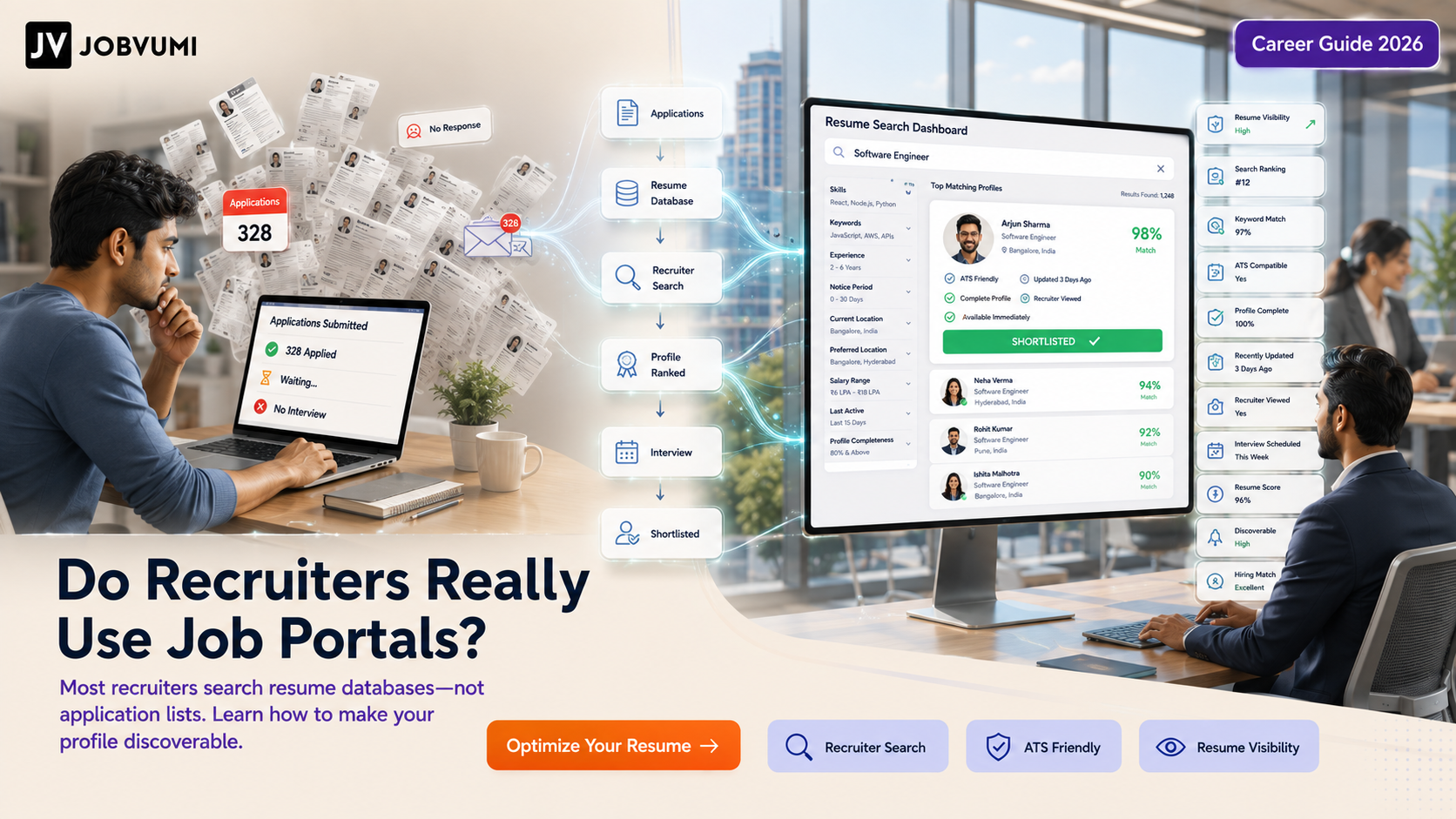
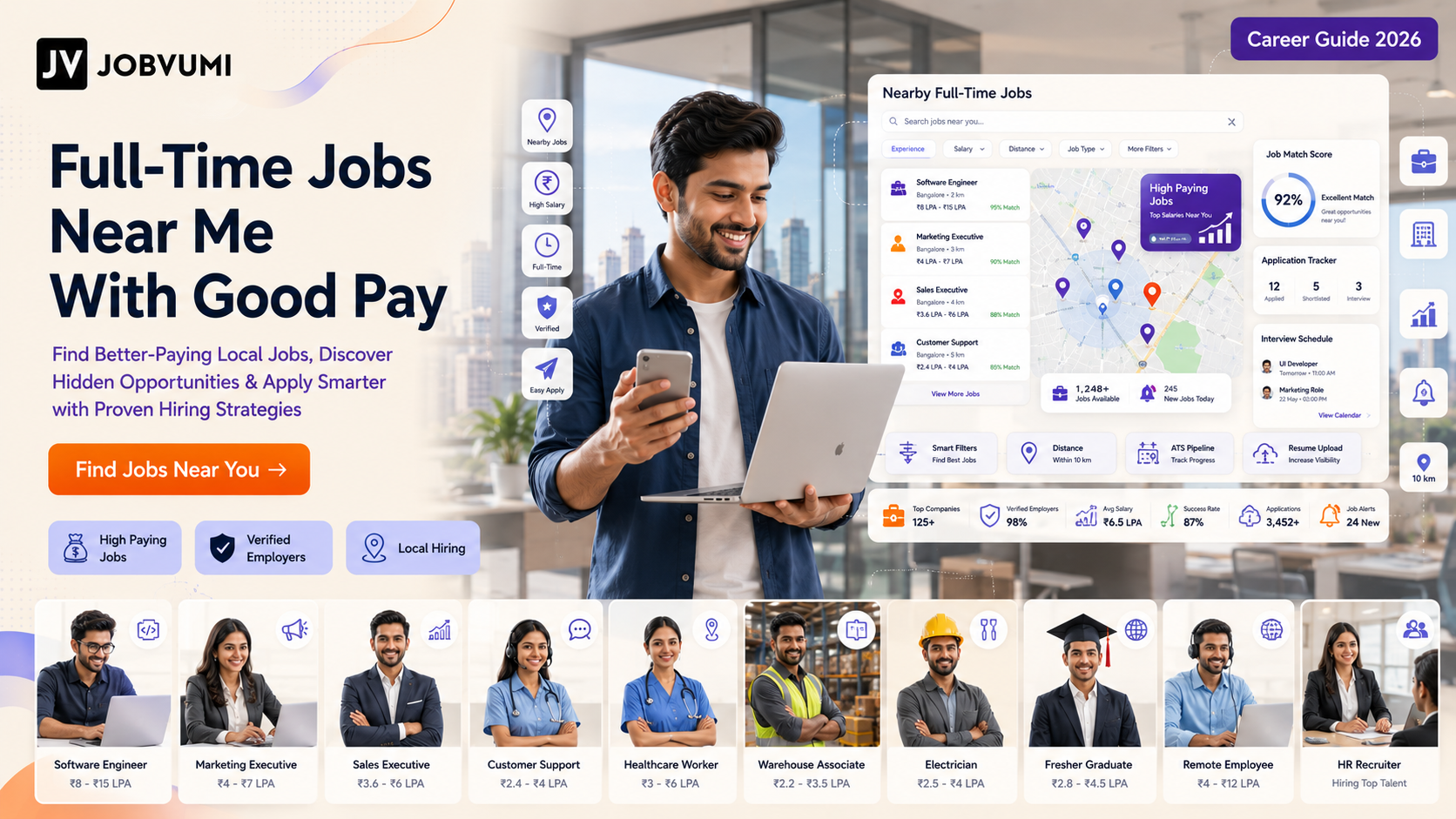
Once the resume’s done, the real hurdle starts, getting it in front of the right people. That means understanding how recruiters actually search job portals, rather than just uploading a PDF and hoping the algorithm gods notice you. Might as well browse current fresher jobs on Jobvumi while you’re at it and see what employers in your field keep asking for, then go back and tighten your resume to match.
Frequently Asked Questions
Do I need work experience to write a good resume?
Not really. Internships, academic projects, coursework, all of it carries the same weight as work experience for entry-level roles, so long as you’re specific instead of vague about what you actually did.
What should a fresher put instead of work experience?
Education, skills, projects, in that order. Got any internship at all, even unpaid or a couple of weeks long? Give it its own section, don’t bury it under “extracurriculars” like it’s an afterthought.
Should I include a photo on my resume?
Leave it out, unless the posting specifically asks. Most Indian employers aren’t expecting one, and it just adds clutter an ATS has to work around for zero benefit to you.
How many skills should I list on a fresher resume?
Somewhere around 6 to 10, picked for the specific role you’re going after. Take a look at current fresher job openings in your field, you’ll start noticing which skills keep showing up across listings pretty fast.
Is a resume objective necessary for freshers?
Not anymore, no. A short, specific summary does more work than a vague objective statement, every single time.
Can I use the same resume for every job application?
You can, technically. But tailoring it, especially matching keywords from each job description, genuinely bumps up your shortlisting odds, since most companies run applications through ATS software before a human ever opens the file.