
Jobs in Faridabad
0 Open Positions found
Date posted
Experience
Your work experience
Work mode
Work type
Work shift
Salary
Minimum monthly salary
Industry
Location
Education
Featured Companies

Latest Jobs in Faridabad for Freshers, Private Companies & Government Vacancies
A truck backs into a warehouse before sunrise. A production shift changes hands. Phones start ringing inside sales offices. Elsewhere, hospital staff are checking rosters for the day ahead.
That is Faridabad on an ordinary weekday.
Most people notice the factories first. Fair enough. They are hard to miss. What receives less attention is everything operating around them. Warehouses keep moving inventory. Banks expand customer teams. Hospitals replace staff. Service businesses hire quietly, often without attracting much attention outside their immediate network.
The result is a job market that rarely moves in one direction. Manufacturing remains a major employer, yet logistics, healthcare, BFSI, sales, and office operations continue creating opportunities for candidates with very different backgrounds and career plans.
Why Faridabad Continues to Generate Jobs Across Multiple Sectors
Industrial Activity Creates Constant Movement
Some cities experience hiring waves. Faridabad experiences turnover, expansion, replacement, and operational recruitment almost simultaneously. Production targets shift. New orders arrive. Warehouse inventories swell unexpectedly. A machine breakdown in one facility can trigger recruitment faster than a carefully planned expansion elsewhere.
Business Growth Extends Beyond Factory Floors
The employment picture becomes more interesting once you stop looking only at industrial units. Sales teams chase new accounts. Logistics operators coordinate freight movement across NCR corridors. Customer support functions quietly expand behind growing businesses. Not dramatic. Persistent.
Multiple Hiring Streams Run Side by Side
That overlap is difficult to ignore. A hospital may need additional staff during a period of rising patient volumes. A bank could be building a new customer acquisition team. Meanwhile, administrative offices continue replacing employees who move between companies in search of better opportunities. None of these developments dominate the local conversation individually. Together, however, they create a labour market with surprising depth, where opportunities emerge from several directions rather than depending on a single industry to carry the entire city.
Top Job Categories in Faridabad
Manufacturing & Production Jobs
Faridabad's industrial landscape is impossible to ignore. Drive through certain stretches early in the morning and shift changes become more visible than traffic signals. Some factories are recruiting because production is expanding. Others are simply trying to keep operations moving without interruption. The reasons vary. The hiring never completely disappears.
Logistics & Warehouse Jobs
A surprising amount of employment exists between a product being manufactured and reaching a customer. Warehouses stay busy. Dispatch schedules change. Delivery commitments tighten unexpectedly. When movement increases, companies start looking for additional hands long before most people notice the extra activity.
Sales, Retail & Customer Support Jobs
Not every vacancy sits inside an industrial unit. Walk through commercial pockets and a different pattern appears. One business is opening a new counter. Another is trying to grow its customer base. A third is replacing staff who moved elsewhere. Recruitment often follows these small business decisions rather than large corporate announcements.
Banking, Healthcare & Office Support Jobs
Some sectors recruit because demand changes. Others recruit because operations cannot pause. That includes hospitals, banks, clinics, and administrative offices. Staff quits, departments grow, customer volumes vary, and vacancies occur more often than candidates expect.
Salary for Jobs in Faridabad 2026
Job Category | Entry Level Salary | Experienced Salary | Hiring Activity |
Manufacturing & Production | ₹12,000 – ₹22,000 | ₹30,000 – ₹55,000 | High |
Logistics & Warehouse Operations | ₹12,000 – ₹20,000 | ₹28,000 – ₹50,000 | Growing |
Sales & Customer Support | ₹15,000 – ₹25,000 | ₹35,000 – ₹60,000 | High |
Banking & Financial Services | ₹18,000 – ₹30,000 | ₹40,000 – ₹70,000 | Consistent |
Healthcare & Hospital Roles | ₹15,000 – ₹25,000 | ₹35,000 – ₹60,000 | Growing |
Office Administration & Operations | ₹12,000 – ₹22,000 | ₹30,000 – ₹45,000 | Stable |
Work From Home & Remote Jobs | ₹10,000 – ₹20,000 | ₹25,000 – ₹40,000 | Expanding |
Jobs for 10th Pass, 12th Pass & Freshers in Faridabad
Not every first job in Faridabad begins with a polished CV.
A warehouse suddenly needs extra hands before inventory starts overflowing. A retailer loses two employees in the same week. An industrial unit adds another shift after a large order lands unexpectedly. Recruitment often begins because something changed yesterday, not because somebody drafted a perfect hiring strategy six months ago.
That unpredictability works in favour of many freshers.
For 10th pass and 12th pass candidates, the local market offers more entry points than outsiders usually assume. Some openings are advertised widely. Others travel through referrals, neighbourhood conversations, former employees, or a manager trying to fill a vacancy before Monday morning arrives.
Work From Home & Part Time Jobs in Faridabad
Faridabad's employment market does not shut down when office doors close. A customer support team may be working from living rooms. A small business owner could be searching for someone to handle enquiries between lunch and dinner. Different rhythm. Same hiring.
Part-time opportunities appear in unexpected places. Coaching centres become busier during admissions season. Retailers suddenly need extra help before festive rushes. Some assignments last a weekend. Others quietly stretch into several months.
Remote work follows a similarly uneven pattern. Telecalling projects, digital support tasks, online coordination work, and business assistance roles surface regularly, although rarely in perfectly predictable cycles.
Where Hiring Actually Happens in Faridabad
Hiring in Faridabad rarely concentrates in one pocket for long. NIT continues attracting recruitment linked to retail, services, and commercial activity, while sectors such as 19, 20, and 37 see regular movement from offices, distributors, and business operations. A different pattern emerges around industrial belts. Sector 59 and Sector 61 remain closely tied to manufacturing, warehousing, and logistics-driven employment.
The interesting part is how these ecosystems overlap. Candidates may start the day looking for industrial jobs and finish up interviewing for customer-facing jobs a few kilometres away.
Emerging Job Trends in Faridabad 2026
The vacancies appearing today do not always look like the vacancies that dominated a few years ago.
Walk through an industrial area and the change becomes easier to spot. One employer is searching for production staff. The building next door is looking for somebody to coordinate inventory movement. A third is trying to fill a role that sits somewhere between operations, customer communication, and problem-solving.
The boundaries are becoming blurrier.
Faridabad is still very much a manufacturing hub, but more and more businesses today need people who can maintain track of information, orders, customers and teams working in the right path. Smaller organisations are quietly exploring remote support instead of upgrading office space as workloads rise.
Job Search Tips for Faridabad Candidates
Vacancies rarely wait.
A company struggling to fill a position today may stop accepting applications by the end of the week, particularly when operational pressure starts building faster than expected and managers prioritise speed over lengthy recruitment cycles.
Stay curious.
Many candidates spend months staring at the same category while entirely different opportunities emerge across commercial pockets, industrial corridors, healthcare facilities, and business support operations.
Look beyond a single job title
Keep documents ready before opportunities appear
Treat walk-in interviews seriously
Revisit fresh listings more often than old applications
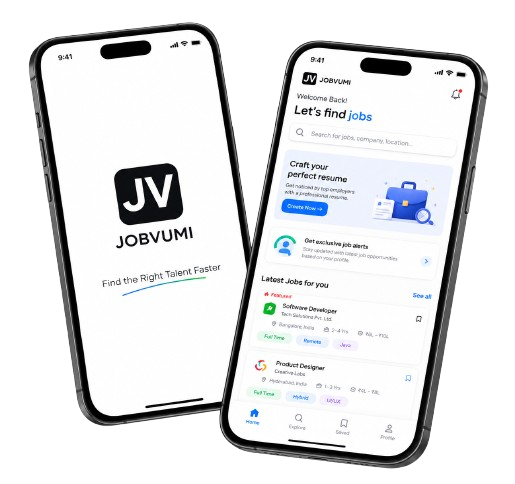
Create your JobVumi profile and activate alerts so newly posted vacancies reach you before they become crowded
Momentum matters.
The candidate who hears about an opening on Tuesday often stands a better chance than the candidate who discovers the same vacancy two weeks later.
Faridabad Keeps Hiring. The Question Is Whether You Hear About It in Time.
From manufacturing and logistics to healthcare, sales, office support, and fresher openings, new opportunities appear across Faridabad every day. Create your JobVumi profile, stay visible, and apply before today's vacancy becomes yesterday's missed opportunity.
Explore Jobs in & around Faridabad
Discover job vacancies in nearby regional markets, neighboring economic hubs, and top industry sectors.
Popular Job Roles in Faridabad
Frequently Asked Questions
The opportunities exist. The timing is the tricky part. Some weeks feel unusually quiet, then several openings appear almost at once across completely different sectors.